
Quick answer
How do you throw an anhyzer?
For a right-hand backhand (RHBH), set the disc so the outside edge is higher than the edge in your hand. Use a mild angle, keep the nose level or slightly down, swing on that same plane, and follow through without rolling your wrist. Start with a neutral putter or midrange at 60–70% power. The disc should move left to right; reverse the flight directions for a left-hand backhand.
This guide focuses on the parts of an anhyzer throw you can actually repeat: release angle, body position, disc stability, aim, height, and practice. An anhyzer is useful when a fairway bends away from your normal backhand fade, a tree blocks the direct line, or you want an overstable disc to flex before fading back.
What an anhyzer release actually is
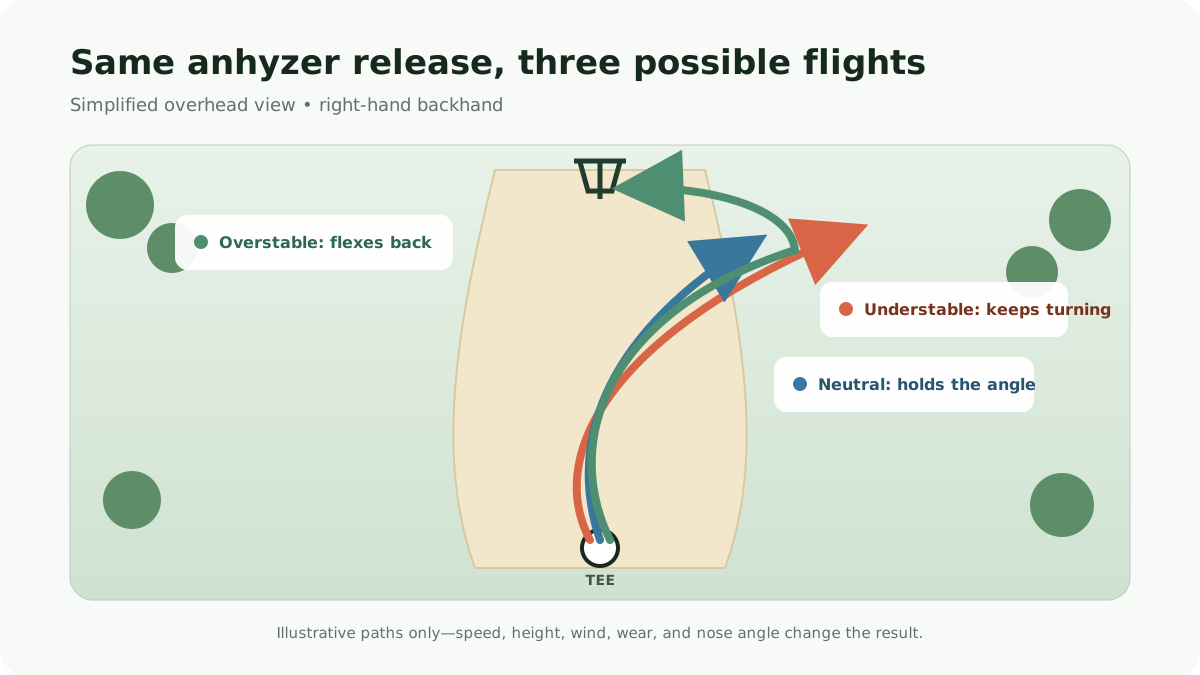
Anhyzer describes the disc's angle at the moment it leaves your hand. The gripped edge is closer to the ground than the ungripped edge—the opposite of a hyzer. On a RHBH throw, this encourages the disc to travel right during its faster portion of flight. It may keep drifting right, flatten, land on edge, or flex back left depending on the disc, speed, height, and wind.
That distinction matters because “anhyzer” is not a promise about the whole flight. Release an overstable disc on anhyzer and it may fight back left. Release an understable disc too steeply and it may keep turning until it becomes a roller.
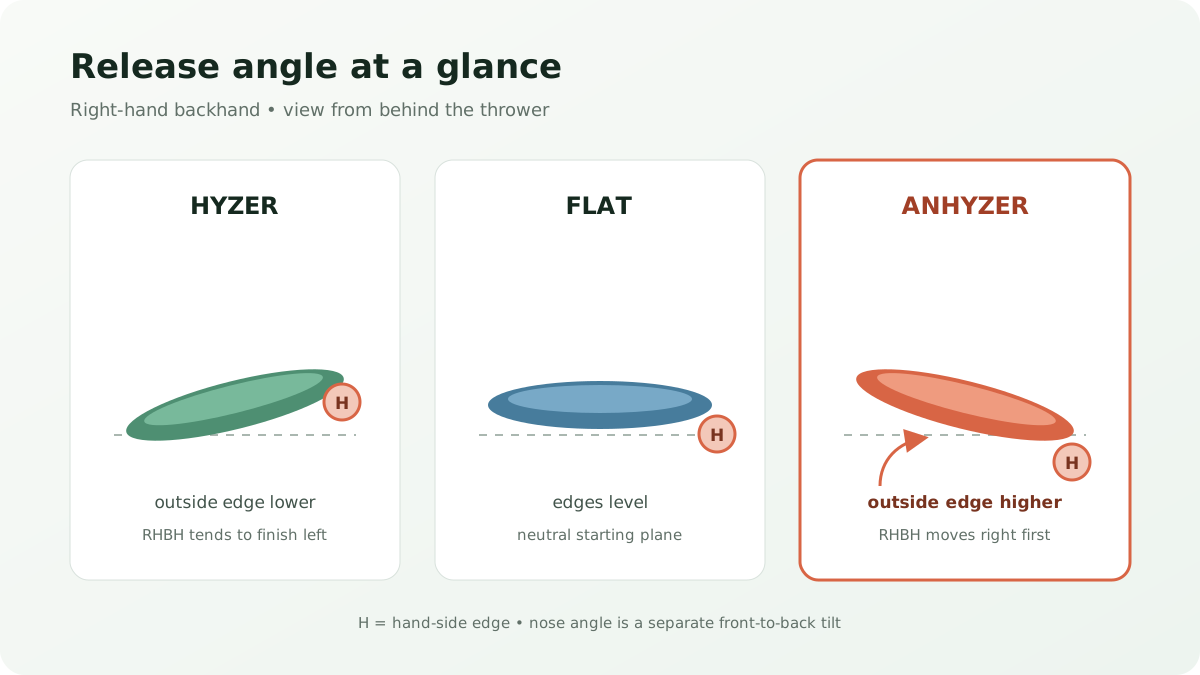
How to throw an anhyzer shot in 6 steps
- Choose a safe right-moving line. For a right-hand backhand, pick a landing zone to the right and an initial gap slightly left of it. Reverse the directions for a left-hand backhand.
- Start with a neutral putter or midrange. Use a familiar disc at 60 to 70 percent power so its flight shows your release angle clearly.
- Use your normal grip and keep the nose controlled. Grip firmly enough that the disc does not wobble. Keep the front edge level with or slightly below the rear edge instead of lifting the nose.
- Set a mild anhyzer angle with your body. Stand tall enough that your torso and shoulder line create a small, comfortable anhyzer plane. Let the disc match that plane instead of twisting the wrist at the last moment.
- Swing through on the same plane. Rotate smoothly, let the arm stay loose, and keep the disc angle steady through a comfortable swing. Do not manufacture turn by pulling hard or rolling the wrist.
- Follow through toward the line. Let the arm finish naturally on the same tilted plane and watch where the disc begins turning, reaches its apex, and lands.
1. Visualize the full line, not just the basket
Pick three points: the initial gap, the highest or widest point of the flight, and the landing zone. For a RHBH shot that must finish right, aim through a gap left of the final landing zone so the disc has room to move. Aiming directly at the basket often makes beginners force the angle or hit the first available tree.
2. Choose a disc that reveals your form
Learn with a neutral putter or midrange you can already throw straight. A very understable driver can turn even when your release is almost flat, while a very overstable driver can hide a weak anhyzer by fading immediately. Slower discs also need less speed and give you more time to see the shape.
3. Set the angle with posture, not wrist roll
Compared with a flat shot, stand a little taller or gently tilt your upper body away from the throwing side—only as far as feels balanced and pain-free. Let your shoulder line, forearm, and disc establish one comfortable plane. If the disc stays flat until the final instant and you twist your palm upward to create angle, release timing becomes difficult and off-axis wobble is likely.
4. Keep nose angle separate from anhyzer angle
The disc can be tilted right/left and still be nose-up. Nose-up throws climb, slow, and often fade early. Keep your wrist comfortably down, pour the “front” of the disc slightly forward, and send the shot on a clean line instead of lifting it with your arm. Add height with the trajectory of the swing, not by raising the nose.
5. Match the swing plane to the release
As your torso turns, allow the throwing arm to extend naturally, then rotate forward and let the arm remain loose through a comfortable power-pocket path. Preserve the tilted plane without yanking the disc in a rigid straight line. A violent correction at the end can turn a modest angle into a cut roller, while a flat follow-through can pull the disc out of the angle too soon.
6. Follow through and hold your balance
Let the throwing arm continue naturally and allow the rear leg to come through. Your finish should feel like the continuation of the throw, not a correction after release. If you fall backward or pull off to one side, reduce power and return to a standstill until you can finish balanced.
Match disc stability to the shot shape
| Disc type | Typical RHBH result on anhyzer | Best use | Main risk |
|---|---|---|---|
| Understable | Turns right quickly and may keep drifting | Long turnover or lower-power player | Burning into the ground or rolling |
| Neutral/stable | Holds the release angle, then lands gently | Learning angle control and wooded lines | Needs accurate height and aim |
| Overstable | Moves right, then fights back left | Flex shot or reliable finish | Fading early if thrown too slowly or nose-up |
Flight numbers are a starting point, not a guarantee. Wear, plastic, weight, altitude, temperature, wind, and your arm speed all change how a disc behaves. Use the same familiar disc while learning, then change stability only when the current flight cannot produce the required shape.
How much angle and height should you use?
| Starting angle | What to expect | Practice use |
|---|---|---|
| Mild: a small visible tilt | Gentle right movement with a lower risk of rolling | Short approaches and first practice throws |
| Moderate: a clear, repeatable tilt | Clear lateral movement; stability strongly affects the finish | Wooded fairways and controlled shaping |
| Steep: a pronounced utility angle | Aggressive turn or wide flex; needs height and disc control | Utility lines after the mild shot is repeatable |
You do not need to measure the release with a protractor: these are visual practice categories, not technical standards. Begin mild. If the disc fades before moving right, add a little angle or use a less stable disc. If it dives right, remove angle, add height, reduce power, or choose a more stable disc. Change only one variable per set so you know what fixed the flight.
Five common mistakes and the fastest fix
- The disc stalls and fades left. The nose is probably up, the disc is too overstable, or the throw lacks speed. First lower the nose and use a slower neutral disc.
- The disc dives into the ground on the right. Use less angle, aim higher, reduce power, or move to a more stable disc.
- The disc wobbles out of the hand. Keep the wrist aligned with the forearm and use a clean, firm grip. Do not roll the wrist to “help” the disc turn.
- Every throw has a different angle. Practice standstill throws and freeze your finishing posture for two seconds. A repeatable base makes the plane easier to feel.
- The line turns correctly but misses long or wide. Move the initial aim point left and reduce speed. Shape control is useful only when paired with a landing target.
If your anhyzer keeps stalling: isolate the nose angle
In r/discgolf discussions about nose angle on anhyzer throws and building a consistent anhyzer release, several players described the same pattern: a flat throw stayed nose-down, but the nose lifted when they changed posture or tried to create the angle with the wrist. These are individual community experiences, not verified coaching instructions, but they suggest a useful diagnostic: compare the anhyzer with your own clean flat throw before adding another wrist movement.
- Throw three flat shots with one neutral putter. Note the height and finish of a clean, penetrating flight.
- Keep the grip and wrist feel unchanged. Stand a little more upright to set a mild anhyzer with the torso and shoulders.
- Use only 50–70% power. Extra effort makes it harder to tell whether the miss came from angle, nose, or timing.
- Film from the side at a safe distance. If the disc rises sharply just after release, compare the fore-aft pitch with the flat throw.
- Finish on the established plane. Do not rescue the shot with a late wrist roll. If it still fades early, test a slightly less stable disc only after the nose is controlled.
Reddit players reported different useful feels—some changed mainly at the torso, while others also made small shoulder or arm-path adjustments. That disagreement is a reason to test cautiously rather than treat one comment as a universal rule. Try only one cue at a time, avoid any position that causes pain, and keep a change only if the release becomes cleaner and the landing pattern becomes more repeatable.
Adjust for wind without guessing
A headwind usually makes a disc behave less stable, so an anhyzer can turn more than expected. Reduce the angle or choose a more stable disc. A tailwind usually makes the disc act more stable, so give it a touch more angle or choose a less stable option. Crosswinds can lift the exposed underside or push the top down; when the consequence is severe, choose a flatter, lower, more conservative line.
A practical 25-throw field drill
Use one neutral putter or midrange and choose a distance you can already reach with a smooth, controlled flat throw. Record the release feel and landing result—not just total distance. The five sets below are an editorial practice structure, not a formal coaching protocol.
- 5 flat calibration throws: Find the power that produces a straight, balanced flight.
- 5 mild anhyzers: Keep the same power and add only a small body/swing-plane change.
- 5 moderate anhyzers: Give the disc more height and watch whether it holds, flexes, or dives.
- 5 landing-zone throws: Set a clearly visible target to the right of the initial line and score one point when the disc finishes inside a safe circle around it.
- 5 correction throws: Choose your most common miss and change one variable—angle, height, power, or stability—to correct it.
A useful benchmark is not one perfect flight. It is getting at least three of five throws to follow the intended side of the fairway and finish near the same depth. When that becomes repeatable, add a slow walk-up or test another disc while leaving the other variables alone.
The 10-second on-course checklist
- Line: Where is the initial gap, apex, and landing zone?
- Disc: Should the shot hold right, keep turning, or flex back?
- Wind: Will it make the disc turn more or fade sooner?
- Angle: Can a mild angle work, or does the line truly require more?
- Finish: Is the likely miss safe on both sides?
Sources and editorial method
Pixel & Plug compared established definitions of hyzer and anhyzer with published release-angle and modern backhand guidance, then used r/discgolf discussions to identify recurring player-reported trouble spots. Community comments informed clearly labeled troubleshooting cues, not factual definitions. We removed false precision where no universal measurement exists and do not claim personal testing or professional coaching credentials. Technique varies with mobility, throwing style, and disc selection.
Frequently asked questions
What is an anhyzer shot in disc golf?
An anhyzer is a throw released with the gripped edge of the disc lower than the ungripped edge. For a right-hand backhand throw, that angle encourages the disc to move from left to right during the high-speed part of its flight.
What disc is easiest for learning anhyzer shots?
A neutral putter or midrange is usually easiest because it makes your release angle visible without turning too quickly or fading too early. Use a disc you already throw straight and begin at controlled power.
What is the difference between an anhyzer and a turnover?
Anhyzer describes the angle at release. A turnover describes a flight in which the disc turns during flight, often after a flatter or hyzer release. A disc can be released on anhyzer without becoming a long turnover, and an understable disc can turn over without an anhyzer release.
What is an anhyzer flex shot?
A flex shot uses an overstable disc released on anhyzer. It first tracks in the anhyzer direction, then fights out and fades in the opposite direction as it slows.
Why does my anhyzer turn into a roller?
The release may be too steep, too low, or too powerful for the disc. Try less angle, more height, or a more stable disc. Also check that you are not rolling your wrist over after release.
Can I throw an anhyzer forehand?
Yes. The angle definition is the same: the gripped edge is lower than the ungripped edge. The flight direction reverses because a forehand spins the disc in the opposite direction from a backhand.